
IRAN
Structured Market Insight
Institutional overview for disciplined international expansion
Iran is a large-scale economy with significant demographic depth, industrial capacity, and natural resource endowment. While regulatory and financial constraints require careful calibration, the country’s structural fundamentals remain relevant for long-horizon strategic positioning.
This overview provides a data-informed foundation for structured market entry planning.
MACRO ECONOMIC INDICATORS — SNAPSHOT
Iran’s macroeconomic structure reflects a sizable domestic market combined with trade integration and industrial depth.
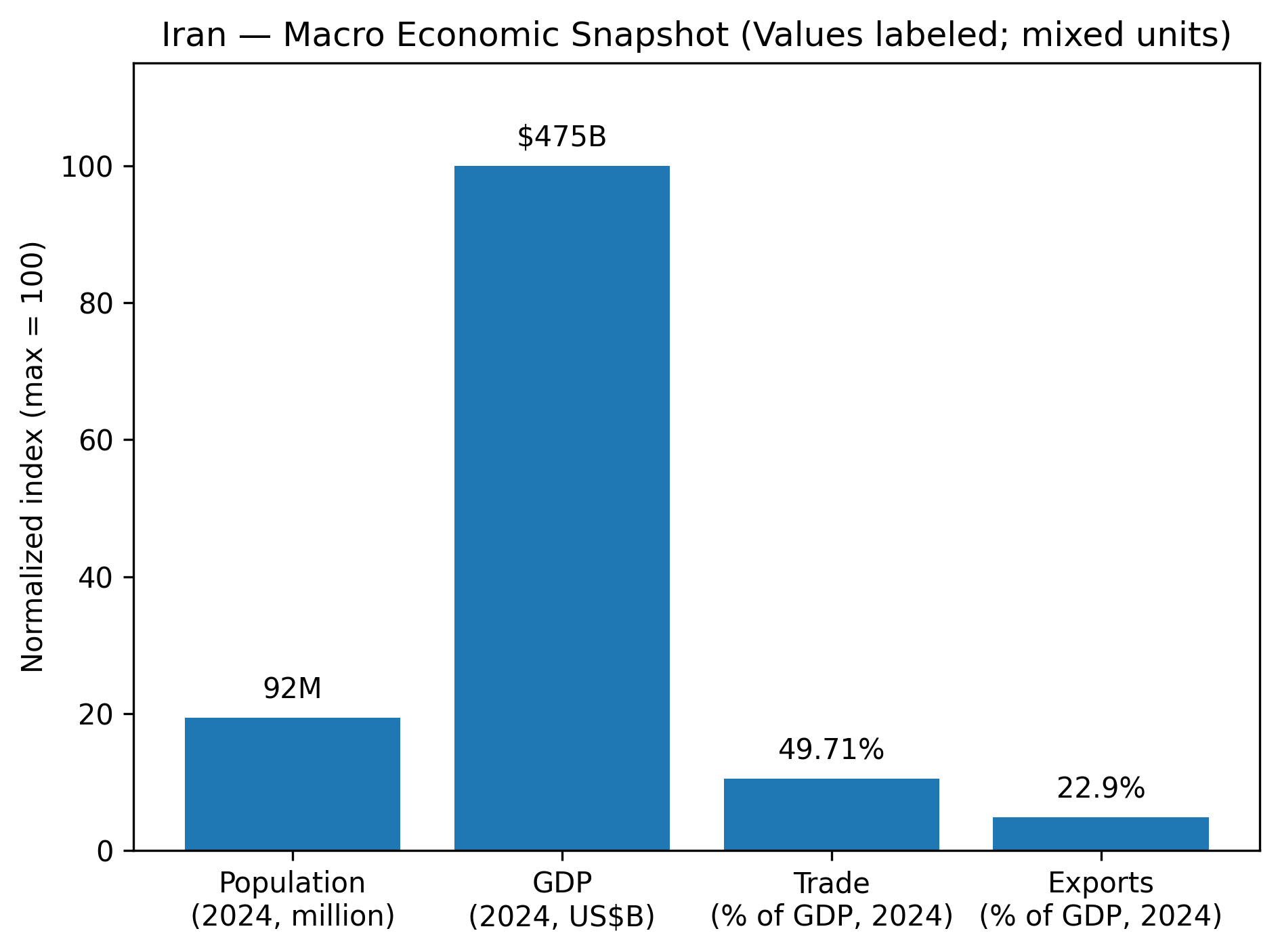
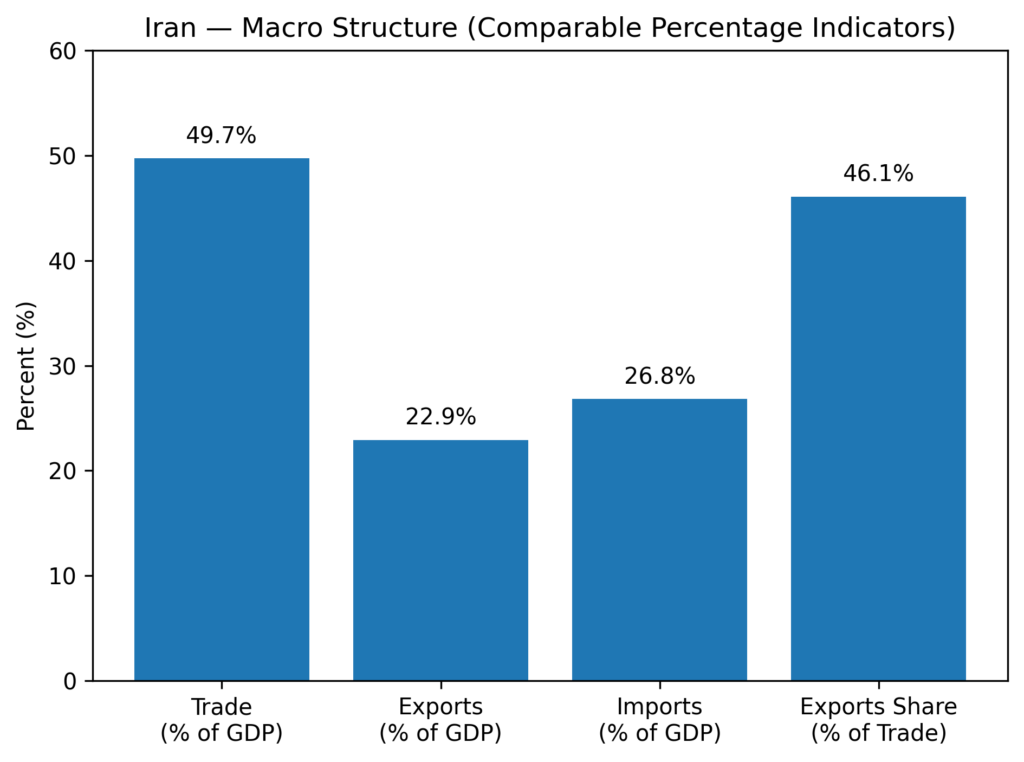
With a population approaching 90 million and a trade-to-GDP ratio near 50%, Iran represents a structurally significant economy. Export activity accounts for a meaningful share of national output, reflecting continued external trade engagement despite regulatory constraints.
Source: IMF, World Bank, CEIC — latest available data.
TRADE STRUCTURE & KEY PARTNERS
Iran maintains active trade relationships with regional and Asian partners, reflecting established commercial corridors.
- Major export partners include China, the UAE, Turkey, and India
- Imports include machinery, intermediate goods, and consumer products
- Trade flows remain regionally concentrated
- Energy exports continue to influence external balances
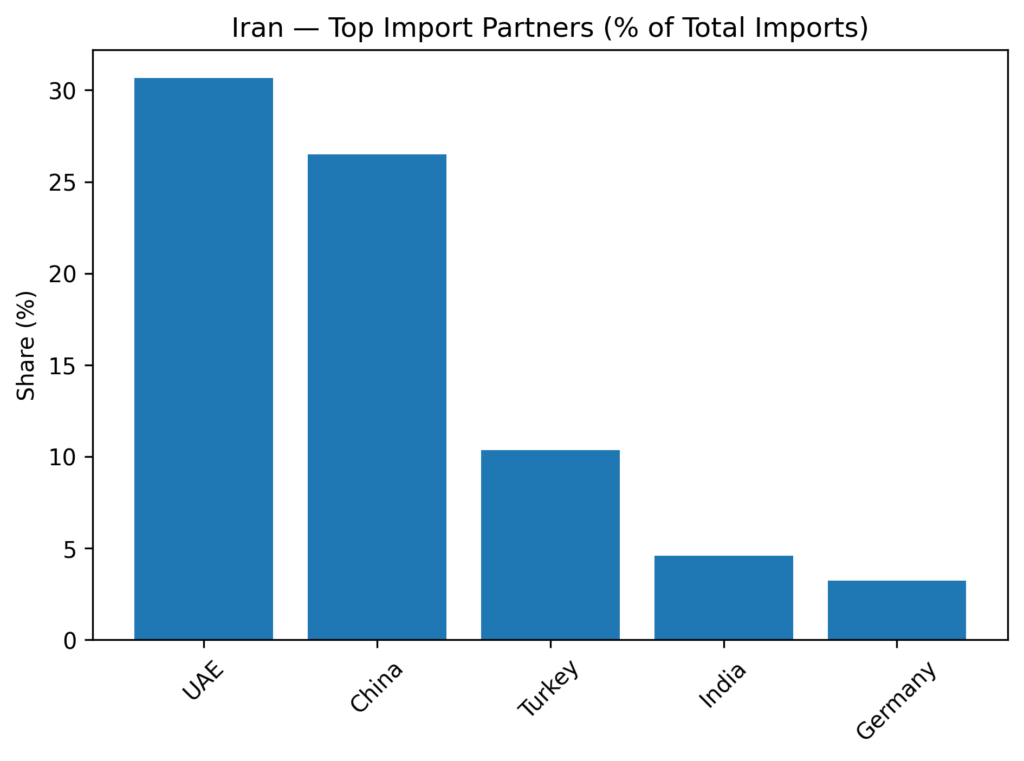
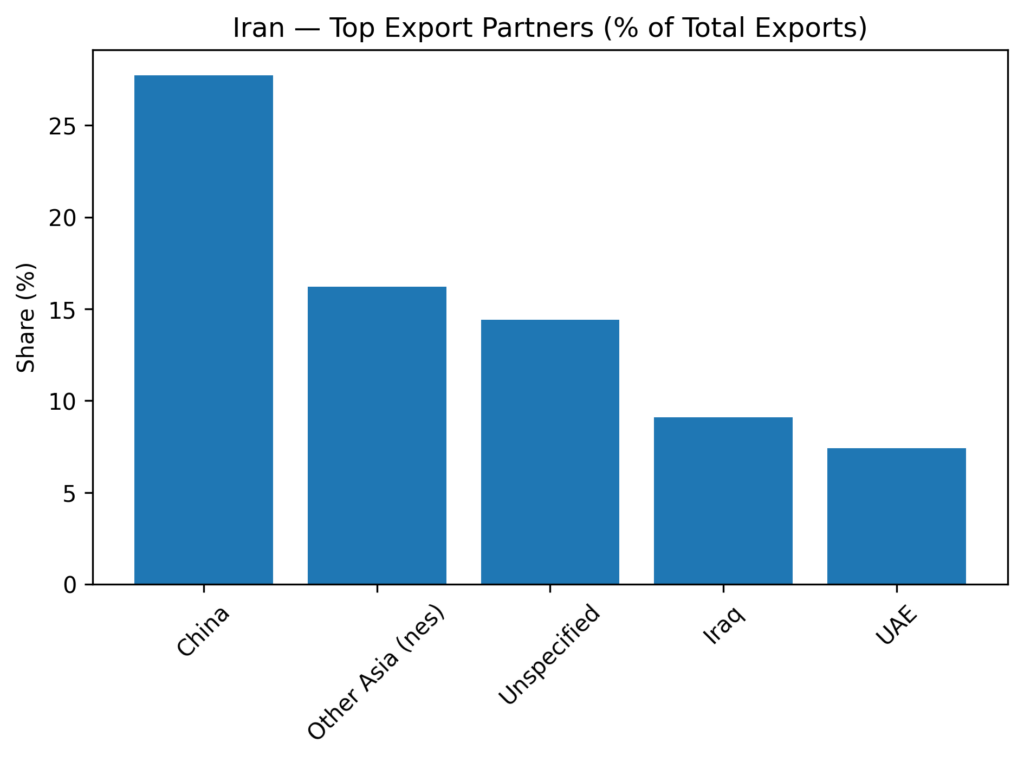
The trade structure indicates established supply chain pathways, underscoring the importance of jurisdiction-specific compliance reviews.
Source: World Bank WITS — latest available data.
ECONOMIC SECTOR COMPOSITION
The Iranian economy demonstrates sectoral breadth across energy, manufacturing, and services.
- Services: Urban demand, trade, logistics, financial services
- Industry: Manufacturing, mining, infrastructure, energy-related production
- Agriculture: Food supply chains, agro-processing, export crops
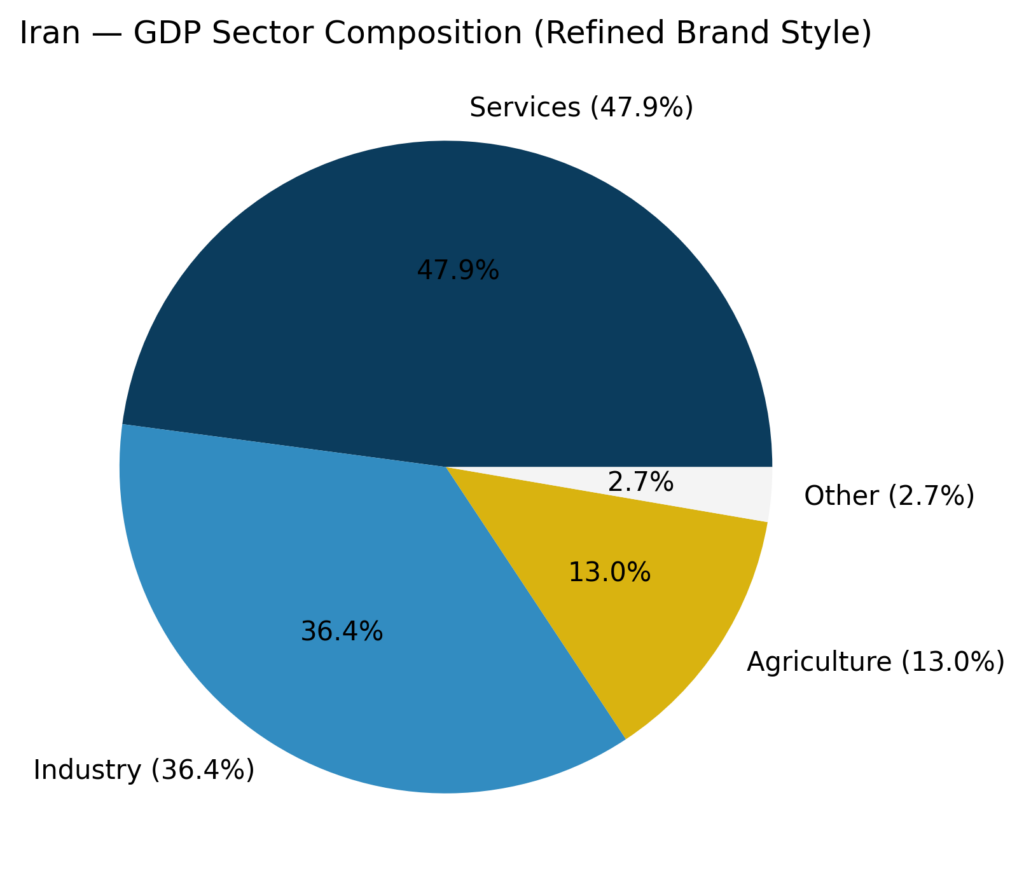
Industrial activity, petrochemicals, manufacturing, and distribution services form core components of economic output. This structural diversity supports cross-sector relevance but requires sector-specific regulatory calibration.
Source: World Bank / National accounts overview.
STRUCTURAL DEMAND DRIVERS
Several structural characteristics underpin long-term market relevance:
- Large domestic consumer base
- Established industrial and manufacturing ecosystem
- Skilled technical and engineering workforce
- Ongoing modernization needs in infrastructure and production assets
- Dependence on imported capital goods and technical inputs
- Significant energy and petrochemical capacity
These indicators reflect structural market fundamentals rather than short-term transactional forecasts.
REGULATORY & COMPLIANCE ENVIRONMENT
Market entry into Iran requires disciplined governance and awareness of export controls. Regulatory frameworks vary depending on product classification, transaction structure, and jurisdiction of origin.
- Export control and dual-use considerations
- Sanctions exposure assessment
- Licensing requirements depending on product category
- Documentation and reporting standards
- Financial channel limitations
- Partner due diligence requirements
This section does not constitute legal advice. All expansion planning should be aligned with applicable Canadian, U.S., EU, and international regulatory frameworks.
KEY RISKS & MARKET CONSIDERATIONS
Professional market planning incorporates realistic risk evaluation:
- Regulatory volatility
- Currency and payment constraints
- Documentation and customs processes
- Contract enforcement variability
Structured decision-making requires formal readiness assessment before operational engagement.
MARKET ENTRY PATHWAYS
Common structured entry models may include:
- Direct export through approved distribution structures
- Agency-based representation (where legally permissible)
- Project-based supply participation
- Joint venture or structured commercial cooperation
- Phased readiness and positioning strategies
Each model carries distinct governance and compliance implications.
HOW VANDA GLOBAL TRADE SUPPORTS STRUCTURED ENTRY
Our advisory-led model emphasizes:
- Structured readiness assessment
- Jurisdiction-specific regulatory calibration
- Partner identification and governance frameworks
- Role definition and commercial boundary setting
- Documented Go / No-Go decision support
Execution or representation follows only where strategic readiness and regulatory suitability are confirmed.
Iran represents a structurally significant but regulatory-sensitive market.
Sustainable positioning is achieved through preparation, compliance discipline, and documented decision frameworks — not transactional speed.