
Middle East
GULF COOPERATION COUNCIL (GCC)
Saudi Arabia | United Arab Emirates | Qatar | Kuwait | Oman | Bahrain
The Gulf Cooperation Council (GCC) represents one of the most capitalized and infrastructure-intensive regions globally. Characterized by sovereign investment capacity, industrial diversification programs, and trade-driven economies, the GCC offers structured entry pathways for disciplined international firms.
Vanda Global Trade supports organizations evaluating strategic expansion into these jurisdictions under clear governance and compliance frameworks.
Regional Scale & Economic
The GCC economies collectively represent a multi-trillion-dollar economic bloc with high per-capita income levels and strong capital deployment capacity.
- Combined GDP: ~US$ 2+ Trillion
- High per capita income economies
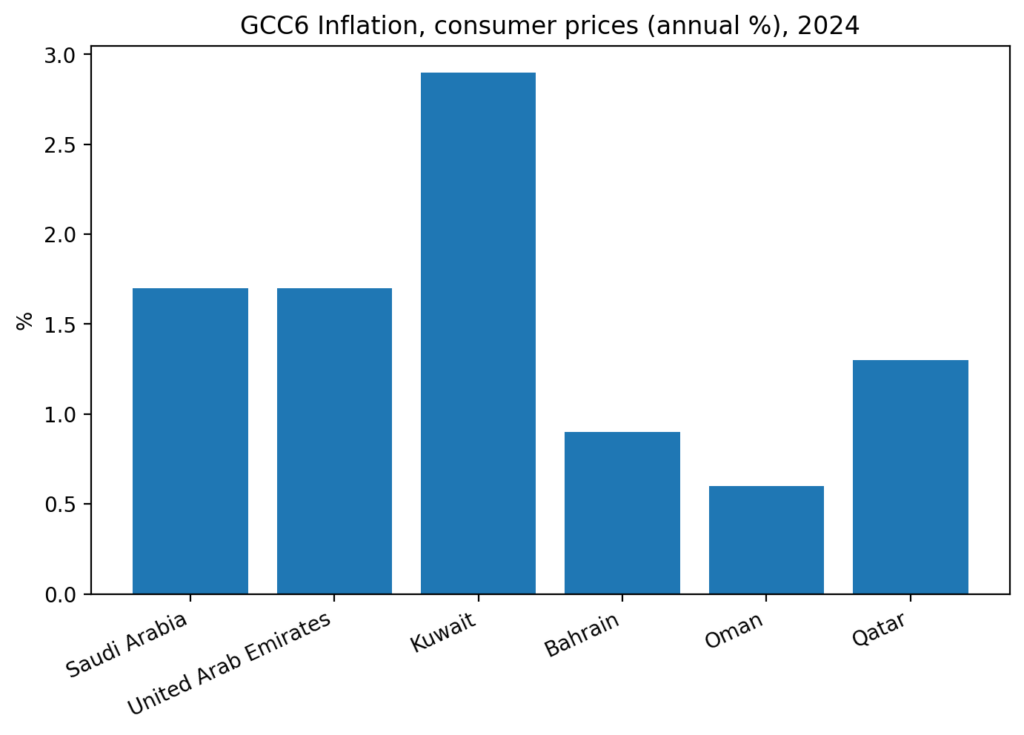
- Controlled inflation environments
- Active sovereign investment programs
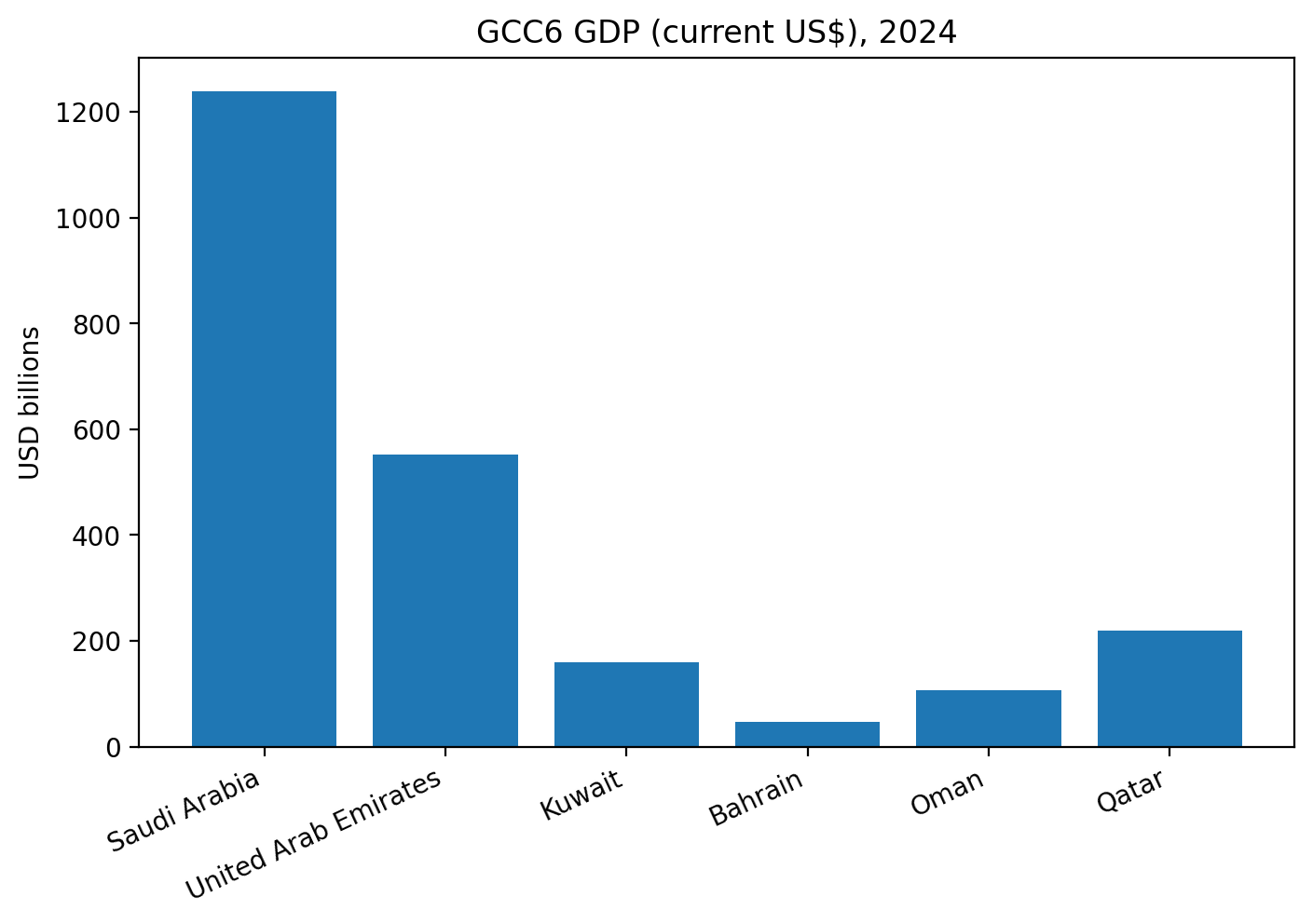
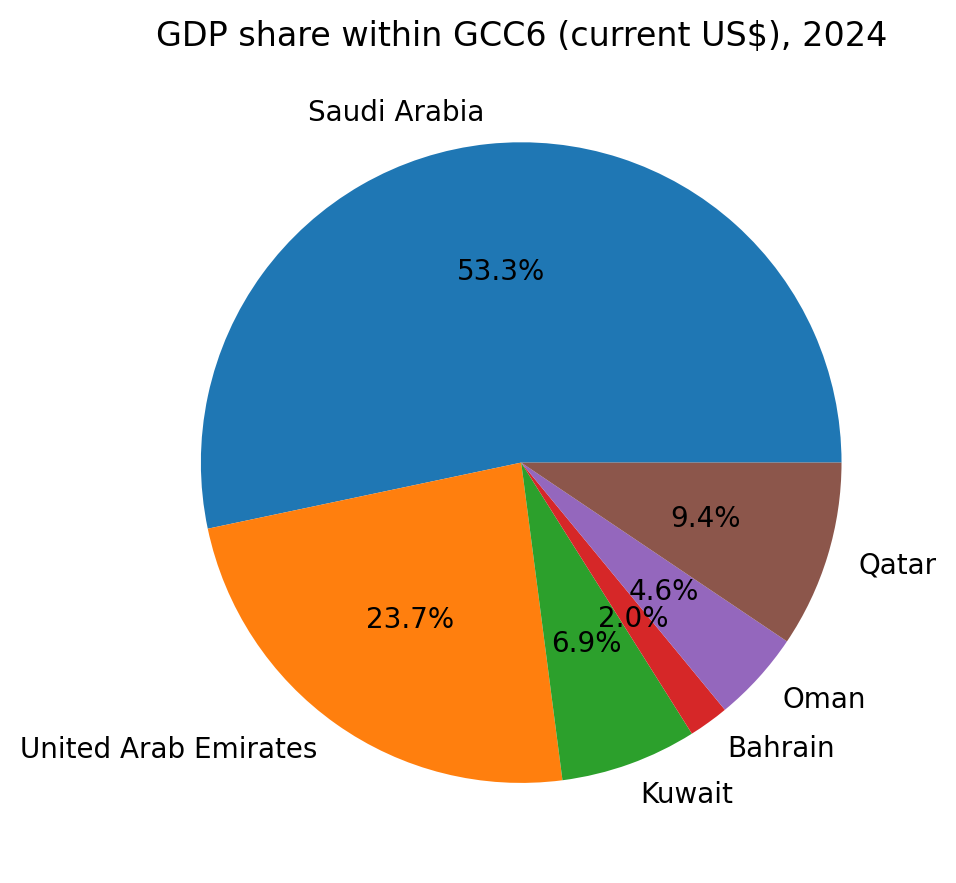
The region’s GDP distribution is concentrated primarily in:
- Saudi Arabia
- United Arab Emirates
Demographic & Market Structure
Multiple regional economies are implementing structured transformation programs designed to reduce hydrocarbon dependence and expand non-oil industrial output.
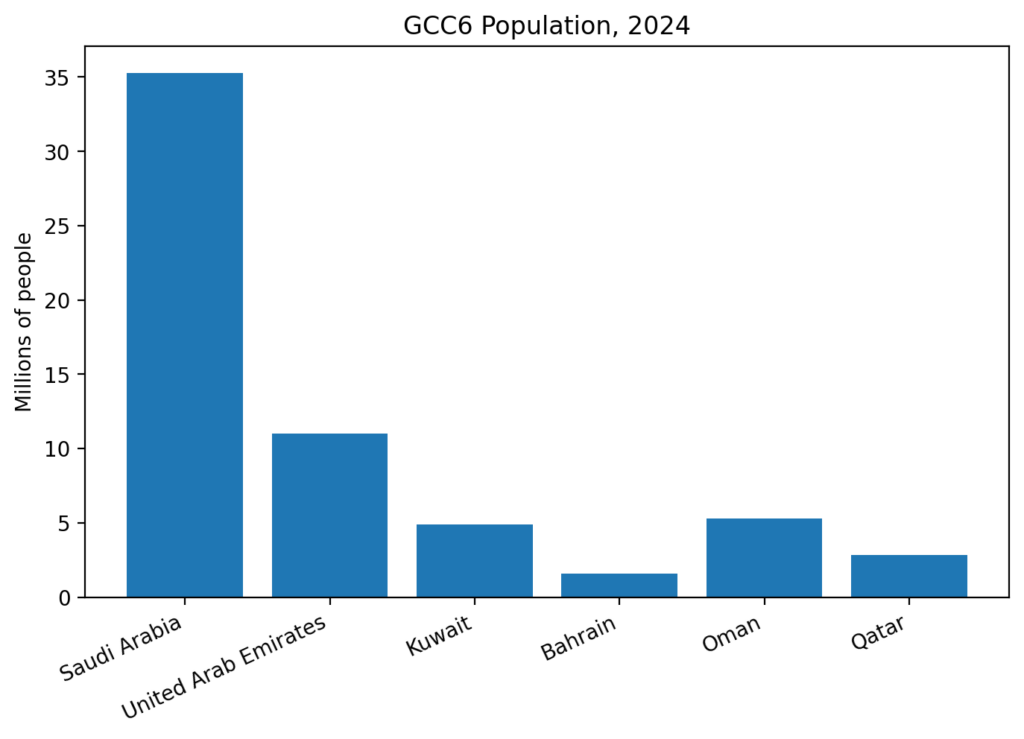
Although population sizes vary significantly across GCC states, the region demonstrates:
High urbanization rates
Strong expatriate labor participation
Young and consumption-active demographics
High digital penetration
Digital capability across the region supports:
- E-commerce expansion
- Advanced logistics
- Smart infrastructure deployment
- Industrial automation
Macro Stability & Capital Environment
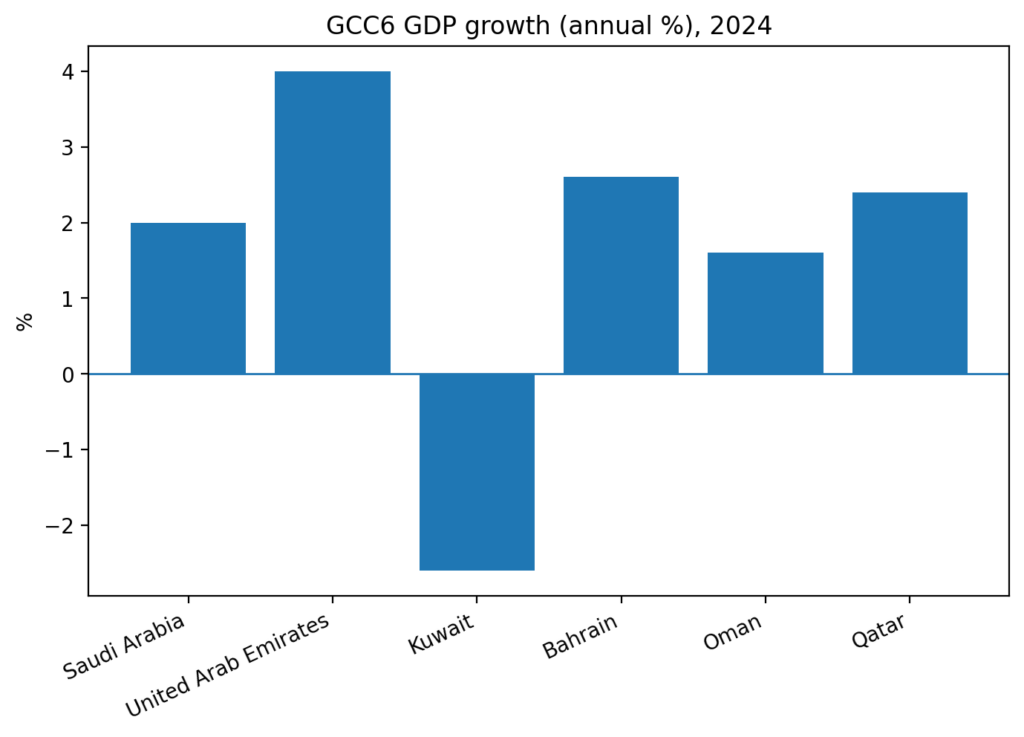
The GCC economies have demonstrated relative macroeconomic stability supported by:
Energy revenues
Sovereign wealth funds
Infrastructure investment pipelines
Diversification initiatives
Foreign direct investment inflows reflect ongoing structural transformation programs across:
- Industrial manufacturing
- Logistics corridors
- Renewable energy
- Smart city development
Sectoral Demand Drivers
Major opportunity themes relevant to North American and European firms include:
- Industrial machinery & automation
- Construction & heavy equipment
- Renewable energy systems
- Water & desalination technology
- Advanced logistics equipment
- Energy transition technologies
The GCC is actively pursuing non-oil diversification strategies under national transformation programs, such as:
Saudi Vision 2030
UAE Economic Vision initiatives
National industrial strategies across Qatar, Oman, Kuwait, and Bahrain
Renewables & Emissions — Energy Transition Landscape
GCC power systems remain predominantly fossil-fuel-based, but varying degrees of renewable integration reflect early transition dynamics. The share of electricity generated from renewables remains modest (highest in UAE), even as Gulf states announce ambitious future energy targets.
Despite relatively low renewable penetration, GCC countries rank among the world’s highest per-capita CO₂ emitters — notably Qatar and Bahrain — emphasizing both climate impact and opportunities for low-carbon industrial infrastructure development.
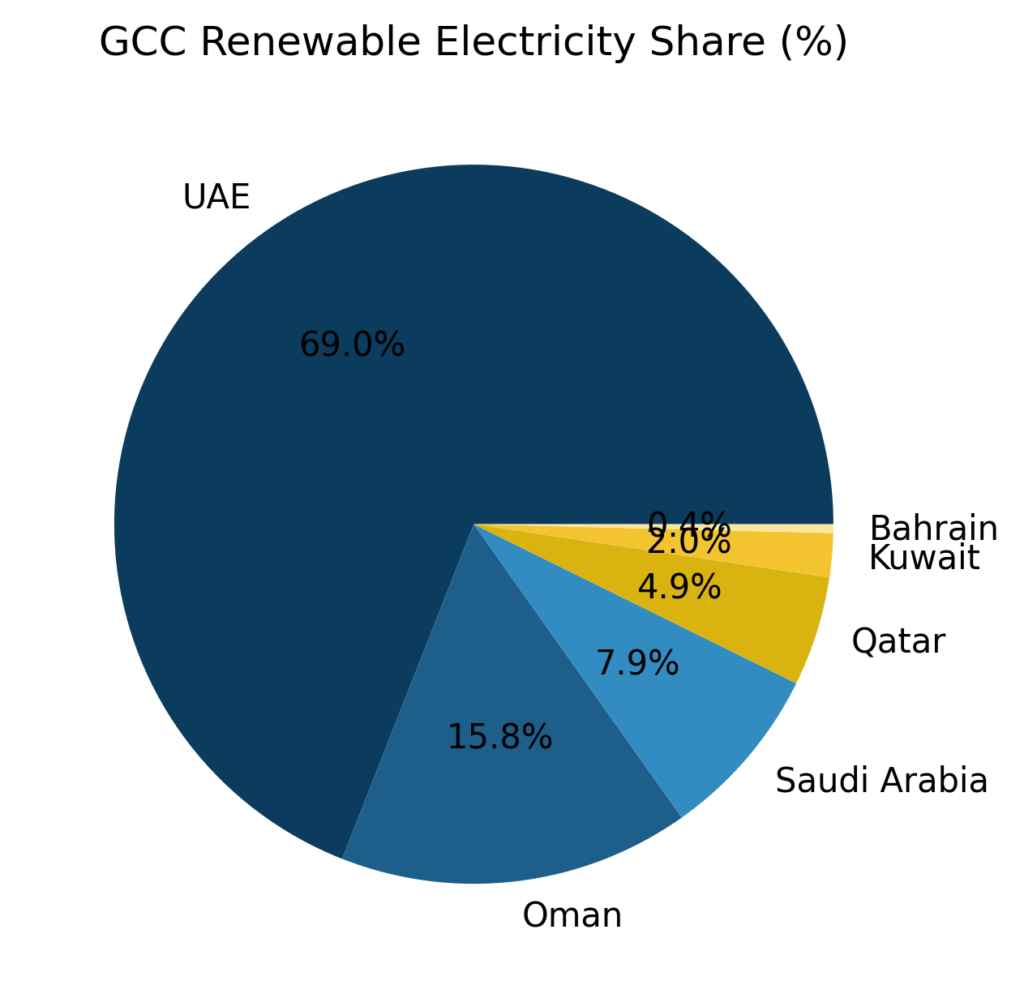
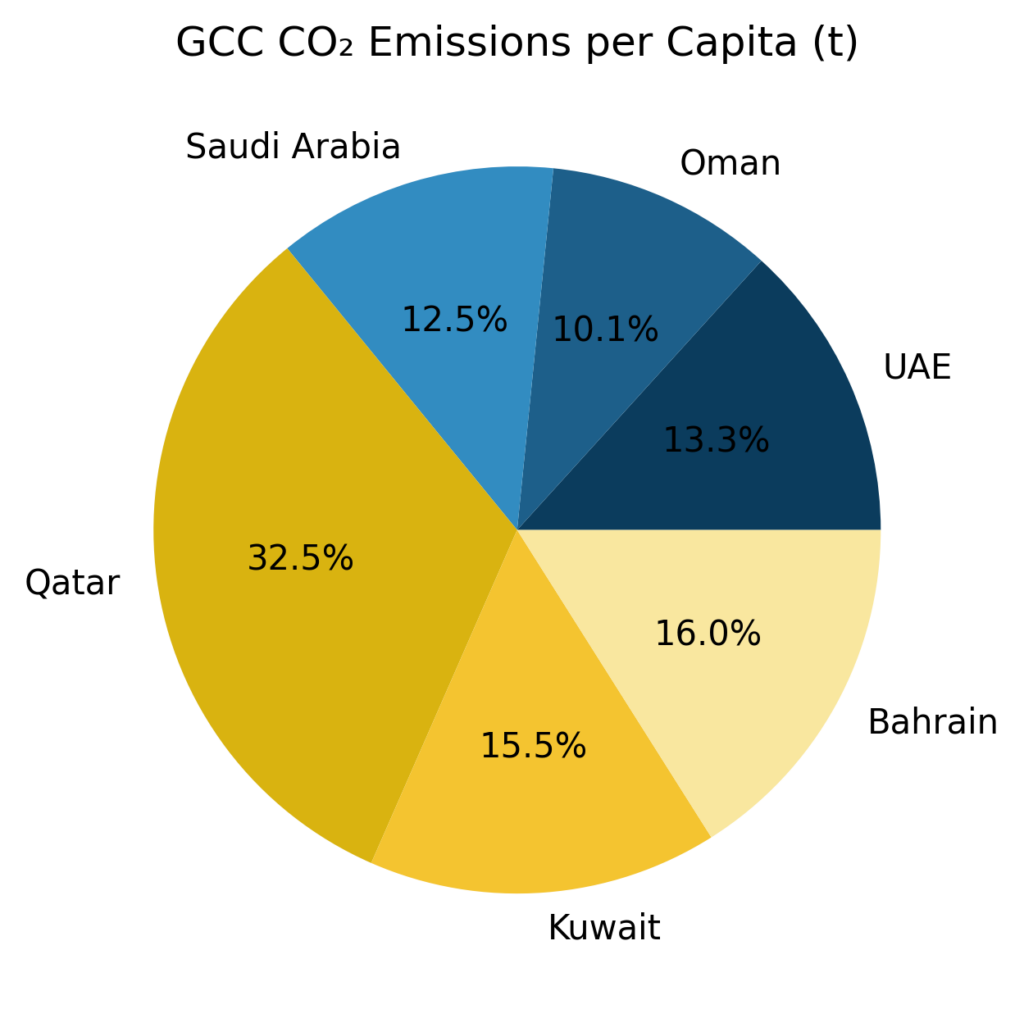
These indicators reflect both sustainability pressure and infrastructure modernization demand.
GCC Renewable Electricity Share (2022)
Share of electricity generation from renewables in Gulf Cooperation Council member states (2022). Renewable adoption is emerging from a low base, but ambitions are strong across the region.
GCC CO₂ Emissions per Capita (2023)
Carbon dioxide emissions per capita across GCC countries (2023), illustrating relative emissions intensity tied to energy systems and industrial activity. GCC per-capita emissions are well above global averages.
Infrastructure & Trade Orientation
The GCC economies are highly trade-integrated and benefit from:
- World-class port infrastructure
- Aviation and logistics hubs
- Industrial free zones
- Cross-border supply chain connectivity
Strategic geographic positioning between Asia, Europe, and Africa enhances re-export and distribution capabilities.
Governance & Compliance Considerations
Engagement within GCC markets requires:
- Clear contractual structuring
- Defined agent and distributor governance
- Regulatory licensing awareness
- Export control compliance alignment
- Local commercial law familiarity
HOW VANDA GLOBAL TRADE SUPPORTS STRUCTURED ENTRY
Our structured advisory-led model:
- Market Readiness Assessment
- Regulatory & Compliance Screening
- Entry Strategy & Structuring
- Controlled Execution (where appropriate and permitted)
We do not facilitate informal transactions or commission-based introductions.
DATA NOTE
Data presented on this page reflects the most recent available indicators published by the World Bank for Saudi Arabia, United Arab Emirates, Qatar, Kuwait, Oman, and Bahrain (GCC6). Reporting years may vary slightly by indicator.
STRATEGIC ENGAGEMENT
If your organization is evaluating structured expansion into the GCC region, we invite a disciplined conversation focused on preparation, compliance, and long-term positioning.